Topmediai®

Ideas to try

Explore topmediai examples free for real projects

A sample is most useful when it answers a specific question: does this voice suit your script, or does this music leave room for speech? Start with a short, testable brief rather than a whole production.

Check available options before sharing

The pain: an idea is hard to judge on paper

A written script or music brief cannot tell you whether its pace, tone, and energy fit the scene.

Three concrete workflows to try

Each workflow begins with a small deliverable you can listen to and revise. Treat these as prompt patterns, not claims about a particular generated result.

  1. 1

    Draft a visitor welcome

    Write two sentences for a museum entrance: a greeting and one practical direction. Ask Topmediai for a calm, welcoming reading, then listen for rushed names or an unnatural pause. Shorten the sentence before changing the voice.

  2. 2

    Test a podcast opening

    Create a brief spoken introduction naming the show and its topic. Generate a separate, restrained music idea, then check whether the melody competes with the first line. Keep only the elements that help a listener understand the opening.

  3. 3

    Sketch a quiet video bed

    Describe an instrumental cue for a slow product demonstration: gentle rhythm, no vocals, and space for narration. Review its mood and transitions against a rough edit. If it draws attention away from the product, simplify the brief.

Example output: from prompt idea to reviewable draft

For the podcast workflow, the useful output is not simply a pleasant sound. It is an opening whose speech remains clear when the background cue is present.

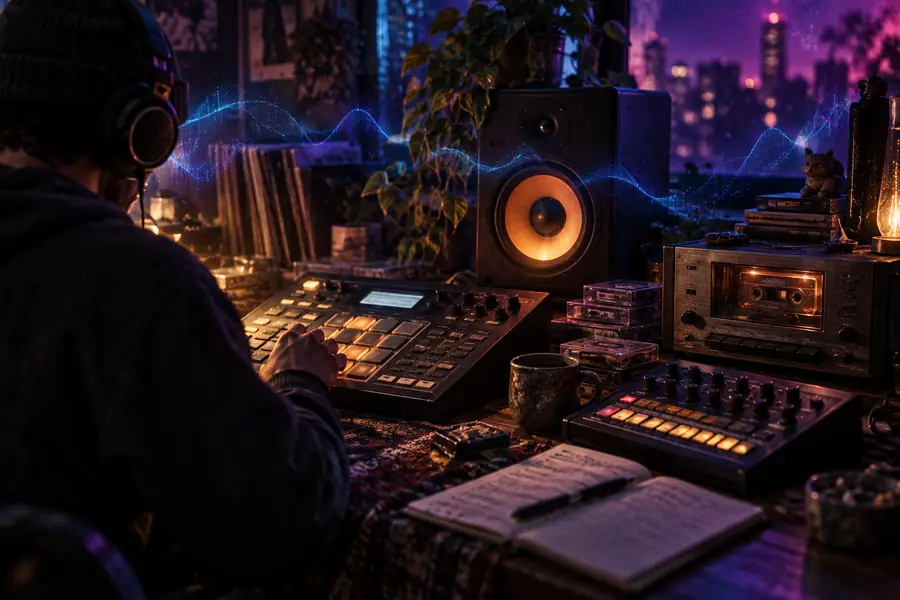
Illustrative artwork for a lo-fi music prompt Brief: quiet opening
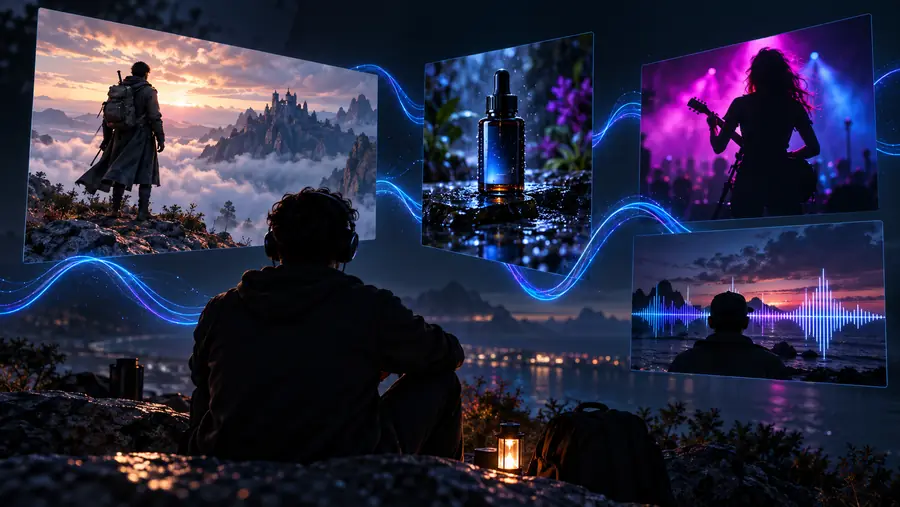
Illustrative artwork for a lo-fi music concept Draft: listen and revise
These images illustrate a music idea; they are not audio previews or proof that a particular prompt produced a particular track. Judge a Topmediai example by listening to the actual draft.

Compliance notes before you share

A free experiment is a way to test an idea, not automatic permission to publish every sound or imitate every voice.

No guaranteed usage rights

This page cannot establish the license for an individual Topmediai output or confirm whether a free result may be used in a public or commercial project.

Workaround

Read the terms and any usage notice attached to the tool and output before publishing.

No consent for a recognizable voice

A voice that resembles a real person can create confusion even when the words are harmless. An example prompt does not supply that person's permission.

Workaround

Use a generic voice description, or obtain clear permission from the person represented.

No promise of a clean final mix

A draft can have awkward pronunciation, abrupt musical changes, or music that masks speech. The artwork above cannot demonstrate audio quality.

Workaround

Listen from start to finish, check unfamiliar names, and compare the sound at the volume your audience will hear.

No verified free allowance

Available voices, music options, limits, and export conditions may change. This page does not confirm which choices are currently free.

Workaround

Check the options shown in the tool before committing to a workflow.

Voice and music need different checks

The same scene may need both, but the review questions differ. Compare these two small draft types before deciding what to keep.

Spoken welcome draft
Instrumental background draft

Starting material

Spoken welcome draft

A short script with the intended audience named

Instrumental background draft

A mood, scene, and instruction to avoid vocals

Primary job

Spoken welcome draft

Make the message easy to understand

Instrumental background draft

Support the scene without distracting from it

First listening check

Spoken welcome draft

Pronunciation, pacing, and pauses

Instrumental background draft

Energy, repetition, and transitions

Useful revision

Spoken welcome draft

Rewrite a long sentence or spell out a difficult name

Instrumental background draft

Request a simpler arrangement or a gentler opening

Common mismatch

Spoken welcome draft

The delivery sounds too formal for the audience

Instrumental background draft

The cue crowds narration or changes mood unexpectedly

Before sharing

Spoken welcome draft

Review voice consent and applicable usage terms

Instrumental background draft

Review music usage terms and the complete audio

Try one small example first

Make a draft you can actually evaluate

Choose a short script or a focused music brief, then listen for one specific quality. Topmediai is more useful as a testing step when you know what would make the draft fit your project—and what would make you revise it.

Try a prompt
  • Keep the first brief short
  • Listen to the complete result
  • Check usage conditions before sharing

Questions about free examples

A short visitor welcome, a podcast introduction, or a quiet instrumental idea gives you something specific to assess. Keep the first Topmediai brief narrow so you can tell whether a revision improves it. Check which options are currently available before you begin.

Do not assume that a draft is cleared for publication because you could generate or preview it. Check the current usage terms for the output and resolve any voice-consent or music-rights questions before posting the video.

Use the same short script and evaluate both at a similar listening volume. Note pronunciation, pace, and whether the delivery suits the audience, then change one variable at a time. That makes the comparison more useful than judging different scripts together.

Describe the mismatch rather than asking for something vaguely better. If it is too busy under narration, request less prominent rhythm or fewer melodic elements. Listen through transitions as well as the opening before choosing a draft.

Start creating
Start creating